
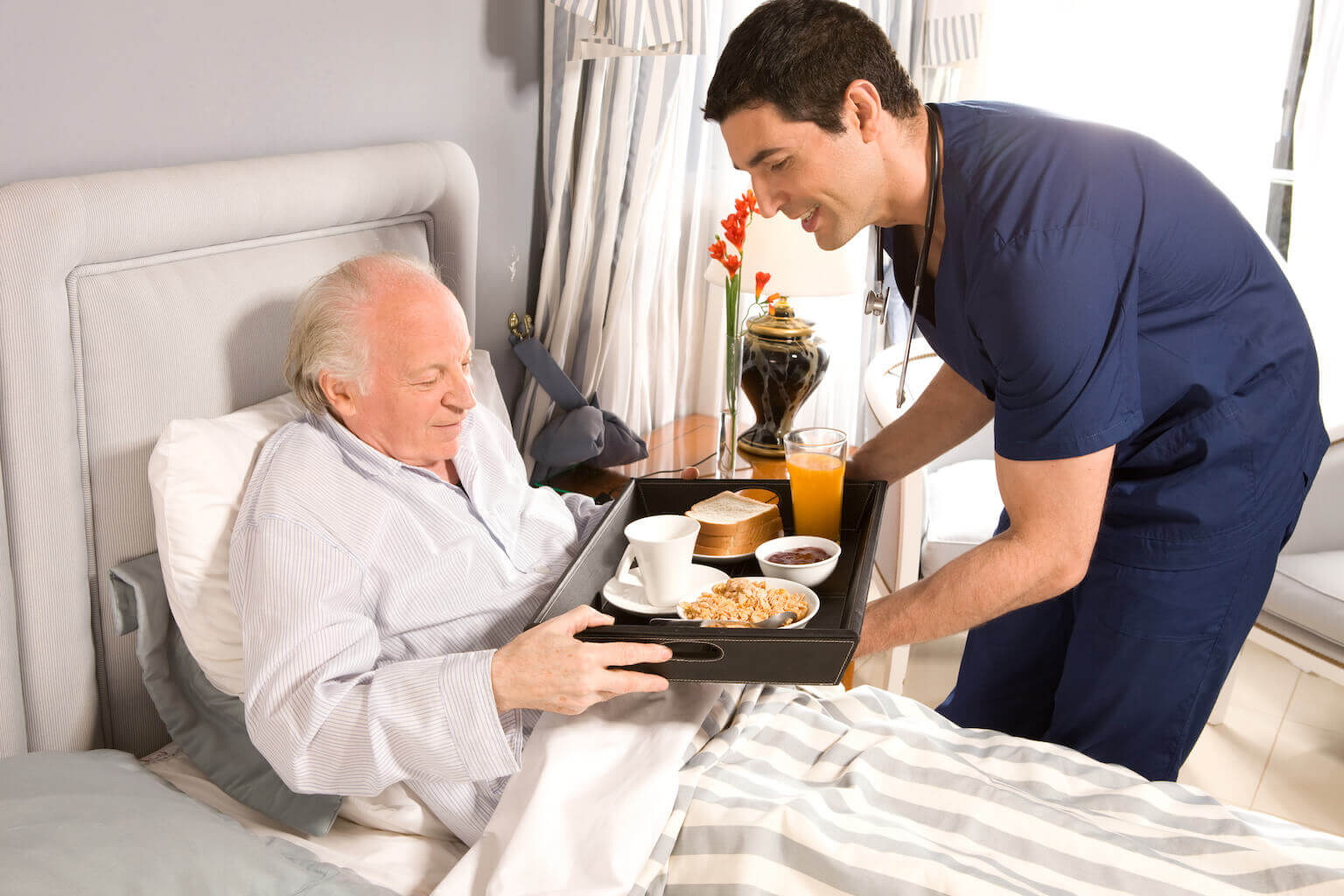
Many older people don’t need assisted living. They’re still managing on their own, yet stiffer joints and reduced mobility may mean they can no longer maintain their household the way they once did. Meal preparation, for example. The time and effort required to cook for one or two people — grocery shopping, assembling ingredients, chopping vegetables, serving the meal, cleaning up afterwards — can become overwhelming.
As a result, a senior might cut corners, eating fast food or buying items that can be eaten without preparation, right from a package, can or jar — which, over time, can lead to nutritional deficiencies.
Nutrition is the bedrock of both health and health recovery, especially for older adults, who may have compromised immunity. Every year over the age of forty, metabolism slows down. Taste and smell diminish with age, and medications can negatively influence appetite. Older adults generate less saliva and stomach acid, making it more difficult for their bodies to process certain vitamins and minerals such as B12, B6 and folic acid, which are necessary for mental alertness, memory and good circulation. Finally, loneliness and depression can affect appetite.
That’s a lot for a senior to deal with while also experiencing physical challenges in the kitchen. Someone who can regularly prepare nutritious meals and tidy the home would be a wonderful solution. Maybe a kitchen robot?
Enter the Future
TV shows such as The Jetsons, Lost In Space, and Star Trek: The Next Generation all featured robots designed to help make life easier. On several Star Trek episodes, the android Data even saved the lives of the crew. But he wasn’t known for his cooking skills.
Now that real-life AI has caught up with science fiction, seniors can purchase a robot from companies such as Ohmnilabs. Five years from now, these household assistants “will be able to wash dishes, do laundry, and clean the house,” enthuses the company founder.
That’s a great innovation. But there is an even more incredible resource available to perform these household tasks right now, along with shopping for, cooking and serving nutritious meals to seniors in their own homes: a caregiver.
Keeping Seniors Healthy
For seniors who need a little help, a caregiver is the missing link between independent living and true well being. Caregivers can provide an array of services according to a household’s needs, and meal planning, shopping, and preparation are high on the list — along with keeping the home clean and tidy.
This level of care from a compassionate caregiver not only means a senior will be eating well; it also reduces family members’ concern, knowing their loved one is being looked after by a competent, caring professional. And until AIs are adept at human emotional intelligence as well as cooking, we think a human caregiver is the best “technology” solution out there.
