
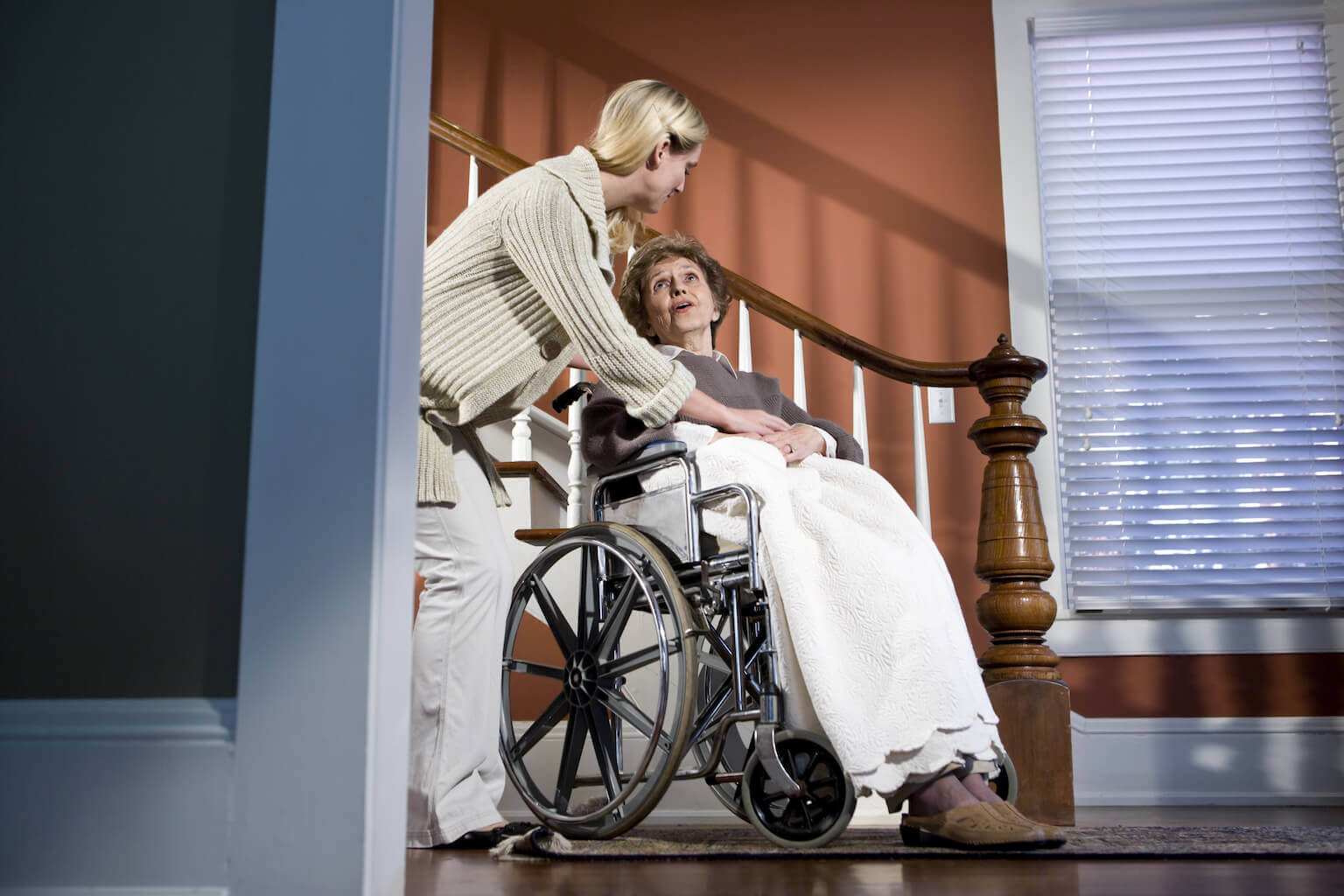
Disability can take many forms. Some people may have become differently-abled at a young age, such as the veterans in this video who work out at a specialty gym for disabled vets. A disability may be due to an illness or accident that occurred later in life. Today there are myriad devices and apps designed to assist those with disabilities, from smart canes and wheelchairs, to full body bionics. These assistive devices mean differently abled adults may be able to manage at home with only minimal additional support.
While the vast majority of seniors want to age in place (grow older in their own home), the reality is, many have health conditions that require regular monitoring and medication. According to the Centers of Medicare and Medicaid services, 54 percent of people over 85-years old have at least four chronic illnesses, and 25 percent have more than six. To thrive in the home, these patients need help: a caregiver and some home modifications that will enable them to stay in the home.
If someone is suffering from mild cognitive impairment or a more serious form of dementia, it is important to recognize the need home care. In the elderly, conditions such urinary tract infection, can mimic the symptoms of dementia.
How TrueCare Supports You
Whatever the circumstance, if you are caring for an elderly loved one, or someone who is differently abled physically or mentally, an online service that supports you can be the ideal solution.
Caregiving needs to be high quality and individualized. Here are some of the ways we designed our services to suit your unique situation:
- Care when you need it. Whereas some agencies require clients to book a certain block of hours per day or per week, TrueCare24 allows you to select as much or as little care as you need.
- Perfect fit. We personally match your needs to one of our top quality caregivers.
- All-in-one solution. Does your loved one need blood drawn or physical therapy after an injury? We provide lab technicians and physical therapists who will come to your home.
- Service that shifts with your needs. Has the health status of the person receiving care changed? If skilled nursing is necessary, nurses will provide the treatment prescribed, and educate the family members about what these new needs entail.
As Dr. Muriel Gillick writes, “Life in the End Zone does not have to be a downward spiral, even for people with serious chronic conditions.” With today’s technological advances, the elderly and differently abled can remain in their homes while receiving high quality home care.
